Category
- ALL
- Screws
- Timer/ Deck screw
- Reduce Point Self-drilling Screws
- Hex Head Self-drilling Screws(Tek Screws)
- Countersunk/Flat/Pan head Self-drilling Screw
- Milling Point Self-drilling Screws
- Concrete Screws
- Zn-Al Capped Self-drilling Screws
- Stainless(ss 304) Capped Self-drilling Screws
- Wood/Chipboard Screw
- No5 Point Self-drilling Screws
- Type 17 Screws
- Head Painted Roofing Screws
- Drywall Screws
- Bolts and STUD
- Nuts
- Stamping
- CNC Turning

Milling Point Self-drilling Screw for Timber
- Milling point tip
- Roofing screws
- Steel truss
- Good performance for thick plate
-
Milling Point Timber Screws
Milling Point Timber Screws, also known as MPS, are high-strength structural timber screws designed for fastening hard timber, 2-ply wooden components, plated trusses, and solid wood engineered timber.
The unique Milling Point is designed to reduce torque when the screw is driven close to the edge of timber, helping reduce the risk of cracking or splitting.
With a 6.4 mm diameter, asymmetric thread, and reinforced screw geometry, MPS provides strong clamping performance and pull-out resistance for structural timber applications.
Milling Point Timber Screw Specifications
Specification Available Options Product Type Milling Point Timber Screw Product Name Milling Point Screw / MPS Main Application Structural Timber Fastening Screw Diameter 6.4 mm Main Materials Timber / Engineered Timber / Plated Truss Point Type Milling Point Screw Function Timber-to-Timber Fastening Typical Applications Plated Truss, Solid Wood, Engineered Timber, Steel + Timber Thread Design Asymmetric Thread Head Design Application Dependent Corrosion Protection C3 / C4 Ruspert Coating Salt Spray Test Up to 1,000 / 2,000 hours Kesternich Test Up to 15 / 20 cycles Customization Customer Drawings and Samples Accepted What Is a Milling Point Timber Screw?
A Milling Point Timber Screw, or MPS, is a high-strength structural wood screw developed for demanding timber fastening applications.
Unlike a conventional wood screw, the MPS uses a specially designed Milling Point at the screw tip.
The point is designed to reduce torque when drilling into the edge of timber.
This allows the screw to be installed closer to the edge while reducing the risk of timber cracking or splitting.
What Is a Milling Point on a Timber Screw?
The Milling Point is the key feature of the MPS.
When a conventional structural wood screw is installed close to the edge of timber, high installation torque can increase the risk of splitting.
The Milling Point is designed to reduce this torque during penetration.
This creates an important advantage for applications where the available edge distance is limited.
Key principle:
Milling Point → Lower Torque → Reduced Splitting Risk → Greater Installation Tolerance
Main Advantages of Milling Point Timber Screws
Reduced Risk of Timber Cracking and Splitting
The primary advantage of the MPS is its ability to reduce the risk of timber cracking when the screw is installed close to the edge.
According to SANN MUO's product information, the special tail design reduces torque when drilling into the edge of the wood, helping prevent cracking.
This provides greater tolerance during installation.
Suitable for Hard Timber
MPS is designed to penetrate hard timber without requiring a pre-drilled pilot hole in applications where the screw specification and timber conditions are suitable.
The product page specifically identifies Merbau as an example of hard timber that the screw can drill into without pre-drilling.
This can simplify installation and reduce the number of installation steps.
Better Installation Tolerance
Timber is a natural material, and actual installation conditions can vary.
The MPS is designed to provide greater tolerance when installers work close to timber edges.
This can reduce:
- Timber splitting
- Installation failures
- Rework
- Material waste
- Time spent replacing damaged timber
Milling Point Timber Screw for 2-Ply Timber
One of the main applications of MPS is fastening 2-ply wooden components together.
The screw is specifically designed for applications such as:
- 2-ply timber
- Plated trusses
- Solid wood engineered timber
- Structural timber assemblies
The high-strength screw body and asymmetric thread help clamp the timber components together and improve pull-out resistance.
Milling Point Timber Screw for Plated Trusses
Plated trusses require reliable fastening between multiple timber components and metal connector plates.
MPS is designed specifically for this type of structural timber application.
Its combination of:
Milling Point + Asymmetric Thread + High Strength
provides a fastening solution designed for structural timber assemblies.
The product page specifically lists truss as one of the common applications.
Milling Point Timber Screw for Solid Wood Engineered Timber
MPS is also designed for solid wood engineered timber products.
These applications can include engineered timber components where high-strength fastening and consistent installation are important.
The screw's asymmetric thread is designed to improve tensile strength and pull-out resistance by firmly clamping the connected components together.
Milling Point Timber Screw for Hard Timber
Hard timber can present greater resistance during screw installation.
The MPS is designed to drill into hard timber such as Merbau without pre-drilling under suitable application conditions.
This makes the product particularly relevant for applications where:
- Timber hardness is high
- Pilot drilling would increase installation time
- Edge distance is limited
- Splitting is a concern
- Installation productivity is important
Milling Point Timber Screw vs. Conventional Structural Wood Screw
Feature Milling Point Timber Screw Conventional Structural Wood Screw Point Design Milling Point Conventional Point Main Application Structural Timber Structural Timber Hard Timber Suitable Application dependent Edge Installation Designed for reduced torque Standard Timber Splitting Risk Reduced Higher depending on application Pre-Drilling Can be unnecessary in suitable hard timber applications May be required 2-Ply Timber Suitable Suitable Plated Truss Suitable Suitable Engineered Timber Suitable Suitable Main Advantage Reduced torque + improved installation tolerance General structural fastening Milling Point Timber Screw vs. Standard Wood Screw
Feature Milling Point Timber Screw Standard Wood Screw Screw Diameter 6.4 mm Application dependent Structural Application Yes Not always High Strength Yes Application dependent Milling Point Yes No Edge Distance Better tolerance Standard Hard Timber Suitable Application dependent Splitting Control Designed to reduce splitting Standard Plated Truss Suitable Application dependent 2-Ply Timber Suitable Application dependent Primary Purpose Structural timber fastening General timber fastening Asymmetric Thread Design
The MPS uses an asymmetric thread design to improve fastening performance.
The special thread angle is designed to increase tensile strength and enhance pull-out resistance.
The thread geometry helps firmly clamp the connected timber components together.
Key Benefits
- Increased tensile strength
- Improved pull-out resistance
- Strong clamping between timber components
- Improved structural fastening performance
Ribs for Clean Screw Seating
MPS also incorporates ribs designed to help the screw sink cleanly into the timber.
The ribs help the screw achieve a firmly fixed position in the timber and contribute to secure seating.
This is particularly useful in structural timber applications where consistent screw seating is important.
Corrosion-Resistant Coating
MPS can be supplied with C3 and C4 Ruspert coating for improved corrosion resistance.
The current product information specifies testing up to:
- Salt Spray Test: 1,000 / 2,000 hours
- Kesternich Test: 15 / 20 cycles
The appropriate coating should be selected according to the application environment and required corrosion resistance.
Milling Point Timber Screw Applications
MPS is suitable for a range of structural timber applications.
Common Applications
Plated Truss
Fastening timber components and metal connector plates in structural truss assemblies.
Solid Wood
Fastening solid timber components where high-strength screw performance is required.
Engineered Timber
Fastening solid wood engineered timber products.
Steel + Timber
Connecting timber components to steel or metal components where the screw specification is appropriate.
The current product page specifically identifies Truss, Solid Wood, and Steel + Timber as common applications.
Milling Point Timber Screw vs. Milling Point Self-Drilling Screw
Feature Milling Point Timber Screw Milling Point Self-Drilling Screw Main Material Timber Metal Main Application Timber-to-Timber / Timber Structure Metal-to-Metal Point Purpose Reduce torque in timber Drill through metal Main Advantage Reduced timber splitting Faster metal drilling Hard Timber Suitable Not the primary application Steel Plate Application dependent Primary Application Plated Truss Yes Steel Truss Screw Diameter 6.4 mm #12–#14 / M5.5–M6.3 Product Family MPS Timber Screw Milling Point SDS Selection Factor Timber type + edge distance Metal thickness + drilling requirement Simple Selection Guide
Fastening timber to timber?→ Milling Point Timber Screw
Drilling and fastening metal to metal?→ Milling Point Self-Drilling Screw
Why Use a Milling Point Timber Screw Instead of Pre-Drilling?
One of the advantages of MPS is that it can eliminate the need for pre-drilling in suitable applications.
For hard timber such as Merbau, the screw is designed to penetrate the timber without a pilot hole under suitable installation conditions.
This can help reduce:
- Installation steps
- Labor time
- Tool changes
- Drilling preparation
- Installation errors
However, pilot drilling may still be appropriate for certain timber types, dimensions, edge distances, or engineering requirements.
Installation Near the Timber Edge
One of the strongest applications for MPS is fastening close to the timber edge.
When installing a conventional screw close to an edge, the timber may split because of the torque and radial force generated during penetration.
The Milling Point is designed to reduce this torque.
Therefore, MPS can provide greater installation tolerance when the available edge distance is limited.
Key Product Benefit
Close to Edge → Reduced Torque → Lower Splitting Risk
Material and Size Options
The current page identifies MPS as a 6.4 mm diameter high-strength wood screw.
For customized requirements, SANN MUO can evaluate:
- Diameter
- Length
- Head design
- Thread design
- Point geometry
- Material
- Coating
- Surface treatment
- Custom dimensions
Customers can provide drawings or existing samples for evaluation.
Customized Milling Point Timber Screws
SANN MUO manufactures customized Milling Point Timber Screws for structural timber applications.
Customization can include:
- Screw diameter
- Screw length
- Head configuration
- Thread geometry
- Milling Point geometry
- Material
- Coating
- Surface treatment
- Packaging
- Customer-specific specifications
For special structural timber applications, customers can provide:
Existing Screw Sample + Technical Drawing + Timber Type + Application
for engineering evaluation.
Milling Point Timber Screws for B2B Buyers
MPS is particularly suitable for B2B buyers working with:
- Timber truss systems
- Structural timber
- Engineered timber
- Timber frame manufacturers
- Building material suppliers
- Construction fastener distributors
- Timber component manufacturers
- Truss manufacturers
For these buyers, screw selection should consider more than unit price.
Important factors include:
- Installation time
- Timber splitting
- Rework rate
- Pull-out resistance
- Screw strength
- Corrosion resistance
- Timber type
- Installation conditions
Second Source for Structural Timber Screws
If you are currently purchasing structural timber screws from another supplier, SANN MUO can evaluate your existing product as a potential second-source solution.
Providing an existing sample allows the product to be evaluated based on:
- Screw dimensions
- Timber application
- Edge distance
- Timber hardness
- Installation torque
- Pull-out requirements
- Coating requirements
This allows buyers to compare suppliers based on actual application performance rather than unit price alone.
FAQ About Milling Point Timber Screws
Q. What is a Milling Point Timber Screw?
A Milling Point Timber Screw, or MPS, is a high-strength structural wood screw designed for fastening timber components, including 2-ply timber, plated trusses, and solid wood engineered timber.
Q. What does MPS stand for?
MPS stands for Milling Point Screw.
It refers to the special Milling Point design used at the screw tip.
Q. What is the main advantage of a Milling Point Timber Screw?
The main advantage is reduced torque when driving the screw into timber, particularly near the timber edge.
This helps reduce the risk of cracking and splitting.
Q. Can Milling Point Timber Screws be installed close to the timber edge?
Yes.
The MPS is specifically designed to reduce torque when drilling near the timber edge, helping reduce timber cracking and splitting.
Q. Can MPS be used in hard timber?
Yes.
The product is designed for hard timber applications and can drill into timber such as Merbau without pre-drilling under suitable conditions.
Q. Can MPS be used for plated trusses?
Yes.
Plated trusses are one of the main applications of the Milling Point Timber Screw.
Q. Can MPS be used for engineered timber?
Yes.
MPS is designed to fasten solid wood engineered timber products.
Q. What is the diameter of the MPS?
The current product page identifies the MPS as a 6.4 mm diameter wood screw.
Q. What is the difference between MPS and a conventional structural wood screw?
The key difference is the Milling Point.
MPS is designed to reduce torque during installation, especially near the timber edge, helping reduce cracking and splitting.
Q. Does MPS require pre-drilling?
Not necessarily.
For suitable hard timber applications, MPS is designed to drill directly into the timber without pre-drilling. The actual requirement depends on timber species, dimensions, edge distance, screw size, and project requirements.
Q. What coating is available?
The product information lists C3 and C4 Ruspert coating, with salt spray testing up to 1,000 or 2,000 hours and Kesternich testing up to 15 or 20 cycles.
Q. Can MPS be customized?
Yes.
SANN MUO accepts customer drawings and samples and can evaluate customized structural timber screw requirements.
Request a Quote for Milling Point Timber Screws
Looking for a Milling Point Timber Screw Manufacturer for structural timber, plated truss, engineered timber, or hard timber applications?
SANN MUO manufactures high-strength MPS Milling Point Timber Screws for international B2B customers.
Send us your:
- Existing screw sample
- Technical drawing
- Timber species
- Timber thickness
- Edge distance
- Screw dimensions
- Coating requirement
- Installation method
- Estimated purchasing quantity
Our engineering team can evaluate the application and recommend the appropriate Milling Point Timber Screw.
-


Milling Point Screw
(Replace "Structural Wood Screws")
The Milling Point Screw, or "MPS", is a 6.4mm diameter wood screw. With its high strength, the MPS is specifically designed to fasten 2-ply wooden pieces together such as plated trusses and solid wood engineered timber products.
Milling Point
The tail of the MPS is designed in such a way that when drilling into the edge of the wood, the torque can be reduced meaning that the wood will not be cracked.
Asymmetric Thread
The special angle design can increase tensile strength and enhance pull-out resistance in a variety of applications. The MPS does this through firmly clinching the plates together to
Corrosion Resistant
C3,C4 Ruspert Coating Salt Spray Test 1000, 2000 hrs Kesternich Test 15, 20 cycles
Ribs
The ribs of the MPS allow for the screw to sink cleanly into a firmly fixed position therefore, increasing its security onto wood.Common Applications

Truss
Solid wood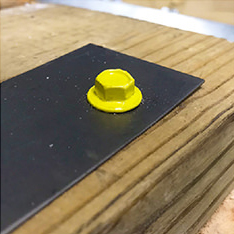
Steel+timber
