Category
- ALL
- Screws
- Timer/ Deck screw
- Reduce Point Self-drilling Screws
- Hex Head Self-drilling Screws(Tek Screws)
- Countersunk/Flat/Pan head Self-drilling Screw
- Milling Point Self-drilling Screws
- Concrete Screws
- Zn-Al Capped Self-drilling Screws
- Stainless(ss 304) Capped Self-drilling Screws
- Wood/Chipboard Screw
- No5 Point Self-drilling Screws
- Type 17 Screws
- Head Painted Roofing Screws
- Drywall Screws
- Bolts and STUD
- Nuts
- Stamping
- CNC Turning

Hex Head Self-drilling Tek Screws
- Patented tip
- Steel to steel assembly
- Steel to timber fix
- Roofing fastening
- Color head painted
-
Milling Point Self-Drilling Screws for Faster Steel-to-Steel Installation
Milling Point Self-Drilling Screws are high-performance self-drilling screws for steel-to-steel fastening, developed for applications where drilling speed, installation efficiency, and consistent penetration are critical.
The key advantage of the Milling Point design is its ability to drill through steel significantly faster than conventional self-drilling screws, while helping reduce the risk of damaging or breaking the steel plate during installation.
Although Milling Point Self-Drilling Screws have a higher unit price than conventional self-drilling screws, their faster drilling performance can help reduce installation time and labor costs.
This makes Milling Point SDS particularly suitable for markets where labor costs are high and installation efficiency has a direct impact on total project cost.
Why Choose Milling Point Self-Drilling Screws?
The value of a Milling Point Self-Drilling Screw is not simply its screw price.
For professional installers and contractors, the more important consideration is the total installation cost.
A Milling Point SDS is designed to provide:
- Much faster drilling through steel
- Reduced risk of breaking or damaging the steel plate
- Shorter installation time
- Lower installation labor requirements
- More consistent drilling performance
- Improved productivity for professional installers
Therefore, the higher screw unit price can potentially be offset by savings in labor and installation time.
Faster Drilling Through Steel
Significantly Faster Than Conventional Self-Drilling Screws
The most important feature of the Milling Point SDS is its drilling speed.
The precision-milled drilling point is designed to cut through steel more efficiently than conventional self-drilling screw points.
For applications involving a large number of steel-to-steel connections, even a small reduction in drilling time per screw can create a significant productivity improvement across an entire project.
This makes Milling Point Self-Drilling Screws particularly valuable for:
- Steel fabrication
- Steel frame assembly
- Steel trusses
- Metal siding installation
- Sheet metal assembly
- Construction projects
- Industrial metal assembly
Reduced Risk of Breaking or Damaging Steel Plate
Designed to Reduce Plate Damage During Drilling
Another important advantage of the Milling Point SDS is its ability to reduce the risk of breaking or damaging the steel plate during drilling.
When a conventional self-drilling screw struggles to penetrate steel, excessive pressure or unstable cutting can increase the risk of damaging the material.
The Milling Point is designed to provide a more efficient cutting action, helping the screw penetrate steel with less unnecessary force.
This can help improve:
- Drilling stability
- Steel plate integrity
- Installation consistency
- Finished product quality
- Installation success rate
For contractors and manufacturers, avoiding damaged steel components can be just as important as reducing drilling time.
Higher Screw Price, Lower Potential Installation Cost
Evaluate Total Cost, Not Just Screw Unit Price
Milling Point Self-Drilling Screws generally have a higher unit price than conventional self-drilling screws because of their specialized drilling point and manufacturing process.
However, screw price is only one part of the total fastening cost.
For professional installers, the total cost can also include:
- Labor time
- Installation speed
- Tool operating time
- Failed drilling
- Damaged steel plates
- Screw breakage
- Rework
- Replacement material
- Project completion time
A higher-performance screw can therefore provide a better overall economic result when the reduction in installation time and labor costs is greater than the additional screw cost.
Milling Point SDS for High Labor Cost Markets
Designed for Markets Where Labor Efficiency Matters
Milling Point Self-Drilling Screws are particularly suitable for markets with high construction labor costs.
In a low-labor-cost market, buyers may prioritize the lowest screw unit price.
However, in a high-labor-cost market, the cost of installing the screw can be much higher than the cost of the screw itself.
For example, when hundreds or thousands of steel-to-steel connections are required, reducing drilling time per screw can significantly improve overall project productivity.
This makes Milling Point SDS a suitable solution for customers who prioritize:
Productivity + Labor Savings + Installation Reliability
rather than simply:
Lowest Screw Price
Milling Point SDS vs. Conventional Self-Drilling Screws
Feature Milling Point SDS Conventional Self-Drilling Screw Unit Screw Price Higher Lower Drilling Speed Much Faster Standard Steel Cutting Ability High Standard Risk of Plate Damage Reduced Depends on screw design Installation Time Shorter Standard Labor Efficiency Higher Standard Steel-to-Steel Application Excellent Suitable Large-Volume Installation Highly Suitable Suitable High Labor Cost Market Highly Suitable Less focused on labor savings Total Installation Cost Potentially Lower Lower screw cost but potentially higher labor cost Best Selection Criteria Productivity / Labor Cost Screw Unit Price Is a Milling Point SDS Worth the Higher Price?
For applications where installation labor is expensive, yes, the higher unit screw price can be justified by faster drilling and reduced installation time.
The correct comparison should therefore not be:
Screw A costs more than Screw B.
Instead, buyers should evaluate:
Total fastening cost = Screw Cost + Labor Cost + Installation Time + Rework Risk
This is particularly important for large-scale steel construction and industrial applications.
Milling Point SDS for Professional Installers
Milling Point Self-Drilling Screws are designed for professional installers who perform a large number of steel-to-steel connections.
For these users, installation speed can directly affect project profitability.
A faster drilling screw can allow installers to:
- Complete more fastening points in less time
- Reduce worker time per installation
- Reduce drilling fatigue
- Reduce tool operating time
- Reduce rework caused by failed drilling
- Improve overall project productivity
Milling Point SDS for Steel-to-Steel Applications
The primary application of Milling Point Self-Drilling Screws is steel-to-steel fastening.
Typical applications include:
- Steel frames
- Steel trusses
- Metal siding
- Steel panels
- Sheet metal
- Construction steel
- Industrial steel assemblies
- Metal fabrication
- Building components
The product is particularly suitable when fast drilling and reliable penetration through steel are more important than minimizing the initial screw purchase price.
How Milling Point SDS Improves Installation Efficiency
The installation efficiency of a self-drilling screw depends on several factors:
- Drilling speed
- Cutting ability
- Required pressing force
- Drilling stability
- Screw breakage
- Material damage
- Installation consistency
The Milling Point design focuses on improving these factors through its precision-milled drilling point.
The result is a self-drilling screw designed around installation productivity, rather than simply minimizing manufacturing cost.
Who Should Use Milling Point Self-Drilling Screws?
Milling Point SDS is particularly suitable for:
- Professional contractors
- Steel construction companies
- Steel fabricators
- Roofing contractors
- Metal siding installers
- Steel truss manufacturers
- Construction companies
- Industrial manufacturers
- Fastener distributors serving professional installers
- Buyers in high labor cost markets
It is especially attractive when the customer installs large quantities of screws repeatedly.
Materials and Size Options
Material
SANN MUO Milling Point Self-Drilling Screws can be manufactured using:
- Stainless Steel 304
- Stainless Steel 316
- Stainless Steel 410
- Carbon Steel 1022
- Carbon Steel 1018
- Alloy Steel 10B21
- Alloy Steel 10B33
Size
Available specifications include:
- Gauge: #10 – #14
- Metric Size: M5 – M6.3
- Length: 1/2" – 10"
- Metric Length: 12 – 250 mm
- Drilling Point: #3 – #5
Custom Milling Point Self-Drilling Screw Manufacturing
SANN MUO can manufacture Milling Point Self-Drilling Screws according to customer requirements.
Customization can include:
- Screw diameter
- Screw length
- Milling Point configuration
- Drilling point
- Material
- Thread specification
- Coating
- Washer
- Head configuration
- Painted screw head
- Customer drawings
- Customer samples
Products can be manufactured according to DIN, IFI, ISO, ASTM, ASME, or customer drawings and samples.
B2B Wholesale Supply for Milling Point SDS
SANN MUO supplies Milling Point Self-Drilling Screws to B2B customers looking for a high-performance alternative to conventional self-drilling screws.
The product is suitable for customers who prioritize:
- Faster installation
- Lower labor costs
- Higher installation productivity
- Reduced plate damage
- Consistent drilling performance
- Large-volume fastening
- Long-term supply
- Second-source supplier development
For overseas buyers, distributors, and contractors, SANN MUO can evaluate existing screws, samples, drawings, and application requirements.
Frequently Asked Questions About Milling Point Self-Drilling Screws
Q. What is a Milling Point Self-Drilling Screw?
A Milling Point Self-Drilling Screw is a self-drilling screw with a precision-milled drilling point designed to improve cutting and drilling performance through steel.
Q. What is the biggest advantage of Milling Point SDS?
The biggest advantage is significantly faster drilling through steel compared with conventional self-drilling screws.
Q. Does Milling Point SDS help prevent steel plate damage?
Yes. The Milling Point is designed to provide more efficient and stable cutting, helping reduce the risk of breaking or damaging the steel plate during drilling.
Q. Why does Milling Point SDS cost more?
The product has a higher unit price because the drilling point requires specialized manufacturing and precision milling.
However, the higher screw price can potentially be offset by reduced installation time and labor costs.
Q. Is Milling Point SDS suitable for high labor cost markets?
Yes. This is one of the strongest market applications for the product.
When labor costs are high, reducing drilling time can have a significant impact on total installation cost.
Q. Is Milling Point SDS more expensive than conventional self-drilling screws?
Yes, the unit price is generally higher.
However, buyers should compare total installation cost, not only screw purchase price.
Q. Is Milling Point SDS suitable for steel-to-steel fastening?
Yes. Steel-to-steel fastening is the primary application.
Q. Is Milling Point SDS suitable for large projects?
Yes. The faster drilling performance is particularly valuable when hundreds or thousands of steel-to-steel connections are required.
Q. Who should buy Milling Point Self-Drilling Screws?
The product is particularly suitable for professional contractors, steel fabricators, construction companies, industrial manufacturers, and distributors serving high-labor-cost markets.
Q. What drilling points are available?
The product range includes #1–#5 drilling points, depending on the required application.
Q. Can Milling Point SDS be customized?
Yes. SANN MUO can manufacture according to customer drawings, samples, dimensions, materials, drilling points, coatings, washers, and application requirements.
Q. Can overseas buyers purchase Milling Point SDS directly from SANN MUO?
Yes. Overseas buyers can provide their specifications, drawings, samples, or application requirements for product evaluation and quotation.
Request a Quote for Milling Point Self-Drilling Screws
Looking for a faster self-drilling screw for steel-to-steel applications?
SANN MUO Milling Point Self-Drilling Screws are designed for customers who prioritize drilling speed, installation efficiency, reduced steel plate damage, and labor savings.
Contact SANN MUO with your required screw size, steel thickness, material, drilling point, coating, washer specification, drawing, or sample.
We can evaluate your application and recommend a suitable Milling Point SDS for your fastening requirements.
-
SELF DRILLING SCREWS
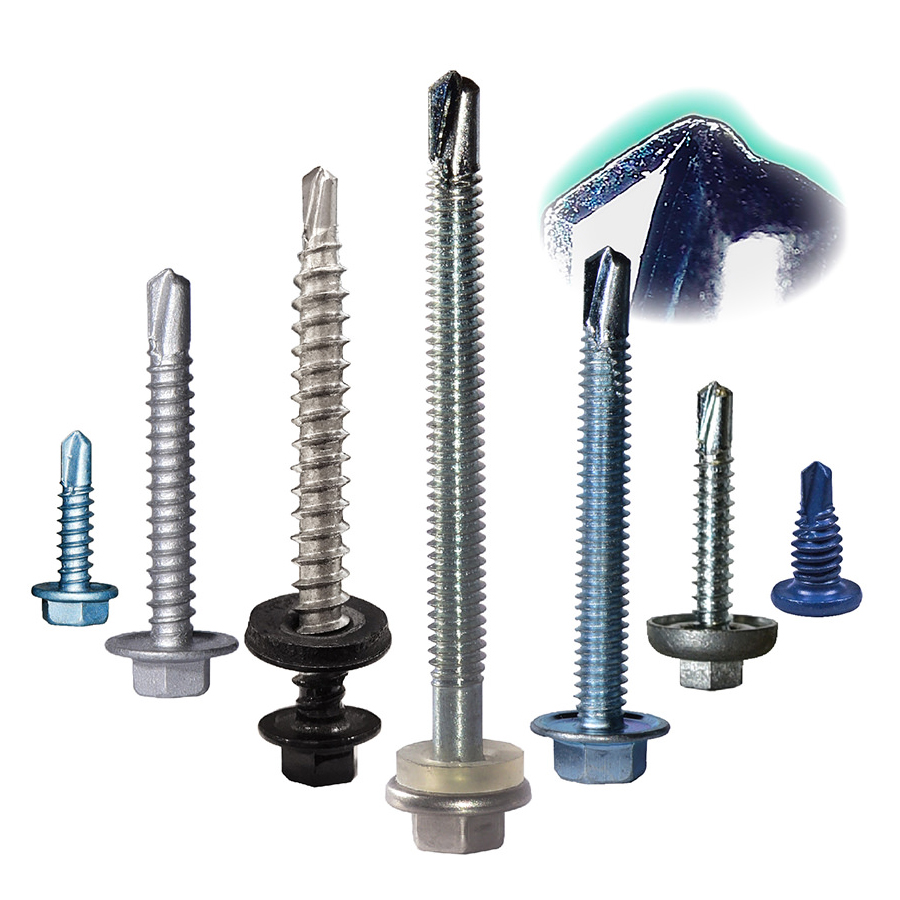
Self drilling screws are very easy to install, but con- tractors still encounter challenges like penetration speed or functioning problems. Therefore, it is our goal to eradicate those challenges by making self-drilling screws that are faster at drilling and are more stabilized.

Easy to use
SEC's Nick Point self-drilling tip contains a small indent slightly on the side of the screw tip. It has been verified through many experiments and comparisons to have a consist shorter drilling time. Furthermore, our feedback from construction staffs indicating an effortless quick drilling speed.
Stable quality
Our self-drilling screws have a better penetration point that is slip resistant. Besides, a single SEC self-drilling screw can be redrilled 5 times without affecting performance.
Suitable coating
Depending on the environment at which your self-drilling screws are applied, we are able to coat these products according to C1-C4 specifications or according to your own customized specifications.own customized specifications.
Any customization
The SEC self-drilling screw can be matched with any EPDM size or steel bonded washer. We can also paint the screw head to the color of your roof or wall.Common Applications

Steel Truss
Metal siding

-
SELF DRILLING SCREWS
Resistance to water, the ability to sustain high temperatures, along with the capability to fix various panels, e.g, thin panels, steel frames, and fiber laminates are the most essential components to constructing roofs and walls. Consequently, advancement in manufacturing technology must exist to meet these criteria. With a professional team focusing on research and development, we have developed such self drilling screws to meet these standards.
Special Tip
The SEC self-drilling screw is equipped with a thread-to-tip design. This allows the screw to be easily penetrated into the iron plate and at the same time, reduce the chances of breaking the plate.
Nick Point
The SEC self-drilling screws uses a Nick Point Tip - a small indent slightly to the side of the screw tip, it is tested in our lab and by construction staffs to be consistent and very efficient at shortening the drilling time.
Asymmetric Thread
The special angle design, as well as the different pitches in the upper and lower sections can also be found in our self-drilling screws. This creates a pull-out resistance that allows the screw to firmly clinch the gaps between the plates.
Straight Knurl
The straight knurl can help expel the iron fillings and enlarge the hole without breaking it. Additionally, it can avoid stretching the rod diameter and reducing the risk of corrosion.Common Applications
Steel Truss
Metal siding
Highest corrosive
environment